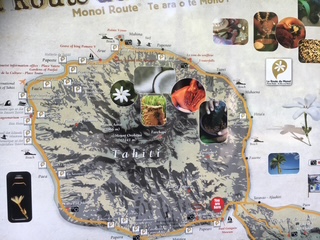
We arrived in Tahiti on a small Air Rarotonga plane from Rarotonga, the capital of the Cook islands. The journey took two hours and forty minutes. As we descended, the island looked dramatic, green and unlike the tropical image many imagine.
Papeete the capital, immediately struck us with its strong French influence. French is spoken everywhere and you can find an abundance of French food from cafes to bakeries giving the island a distinct European feel in the middle of the Pacific.
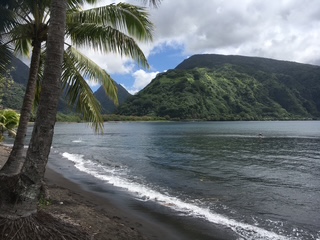
Tahiti’s landscape is strikingly different from the stereotypical white sands paradise. The island is mountainous, covered in lush vegetation and surrounded by a rugged coastline of black volcanic sands. Plage Taharuu for example stretches out in a long expanse of deep black volcanic sand – striking and unusual.
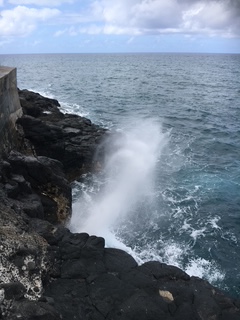
Natural attractions are everywhere. The Arahoho Blowhole is a must see-see where ocean waves crash into an underground cavern, building pressure before erupting dramatically into the air.
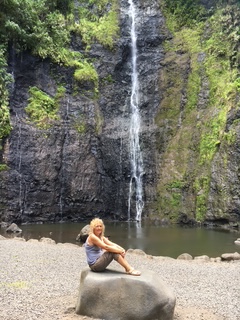
The Faarumai Waterfall is another great place to visit, though swimming is no longer allowed there. Marar’a Grottoes are another highlight with caverns draped in lush greenery filled with clear still water.
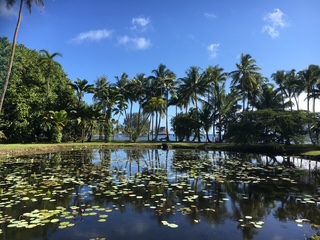
For somewhere tranquil, the Jardin Botanique offers a peaceful escape. There are towering trees with gnarled roots surrounded by calm waters dotted with lilies. The Vaipahi Spring gardens are lush and beautiful too.
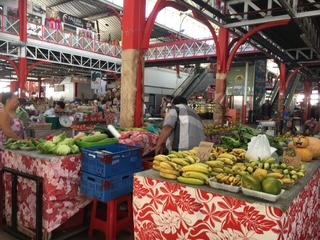
Back in Papeete, the central market is vibrant and full of life. Stalls overflow with tropical fruits, handmade crafts and local goods.
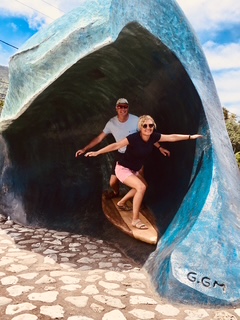
On the south western coast of Tahiti lies Teahupo’o, famed as the birthplace of surfing. It’s no surprise that this was the surfing venue during the Paris Olympics. This side of the island feels less developed, making the drive there all the more scenic and rewarding.
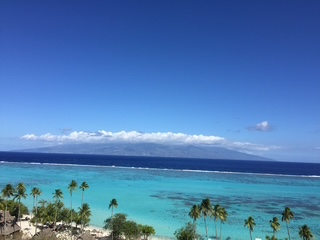
A short 45 minute ferry ride takes you to Moorea and the contrast is immediate. This is the picture-perfect paradise – white sand beaches, turquoise seas and iconic over water bungalows
One unforgettable experience was visiting the northern part of the island around Haru Point where you can swim with sharks and stingrays. While it is possible to explore independently by canoe which you rent from a local hotel, it is best to go out in an organised tour. We found ourselves battling strong currents which was not the safest situation. Swimming alongside sharks and sting rays is an adrenaline filled experience, thrilling but not for the faint hearted.
Moorea’s beaches are simply breath-taking. If Tahiti is raw and dramatic, Moorea is soft and idyllic. These islands are two very different but equally unforgettable places to visit.
Top Tips

If you are in Tahiti on a Sunday, visit the Temple de Paofai and watch the congregation arrive with the women dressed in elegant white dresses and beautifully styled hats.
If you are craving white sand though, Plage du PK 23.5 delivers and is one of the most beautiful beaches on the island.
Hiring a car is the best way to get around both islands but beware that traffic is surprisingly heavy in Papeete.
Note that food and eating out is very expensive.
If you like pearls, especially black pearls, visit the Robert Wan Pearl Museum in Tahitihttps://www.robertwan.com/pearl-museum
 QuitandExplore.org